

About the Authority
The Law for Establishing the General Authority for Printing and Publishing the Holy Qur’an, the Prophetic Sunnah, and Their Sciences.
Law No. 10 of 2011 Regarding the Establishment of the General Authority for Printing and Publishing the Holy Qur’an, the Prophetic Sunnah, and Their Sciences
After reviewing the Constitution,
Law No. (16) of 1960 issuing the Penal Code and its amendments,
Decree-Law No. (31) of 1978 on the rules for preparing general budgets, monitoring their implementation, and final accounts, and its amendments,
Decree-Law No. (15) of 1979 regarding Civil Service and its amendments,
The Decree issued on April 4, 1979, concerning the Civil Service System and its amendments,
Law No. (3) of 2006 regarding Publications and Publishing,
The National Assembly has approved the following law, which we have ratified and issued:

The Legal Principle
Articles of the Law Establishing the Authority
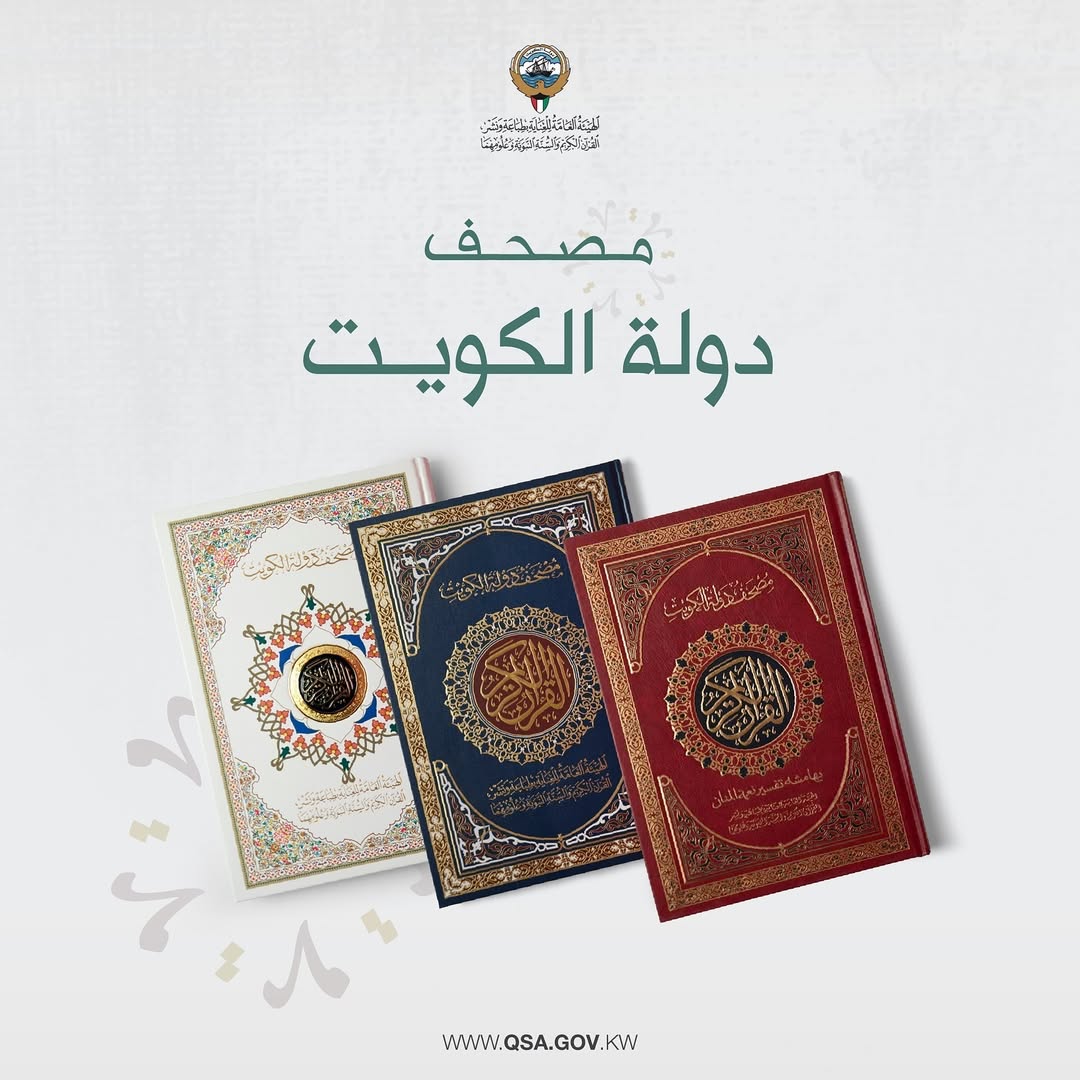
The latest publications of the Public Authority for the Care of Printing and Publishing the Holy Quran, the Sunnah, and their Sciences
The Holy Quran App Now


A public authority with an independent legal personality shall be established, called the “General Authority for Printing and Publishing the Holy Qur’an, the Prophetic Sunnah, and Their Sciences.” It shall be overseen by the Minister of Awqaf and Islamic Affairs, hereinafter referred to as the “competent minister” in the following articles.
The authority shall have a budget attached to the general state budget.
The financial resources of the authority shall consist of the amounts allocated to it annually in the state budget, as well as donations, grants, gifts, bequests, and the proceeds from endowments that the Board of Directors decides to accept.
The authority aims to:
- Care for the sciences of the Holy Qur’an.
- Care for the Prophetic Sunnah.
- Care for Islamic research and studies.
- Meet the needs of Muslims inside and outside the State of Kuwait for Islamic publications.
The authority has the following means to achieve its objectives:
- Printing the Noble Qur’an in the well-known recitations.
- Recording the recitation of the Noble Qur’an in the well-known recitations.
- Translating the meanings and interpretations of the Holy Qur’an into various languages.
- Translating the Prophetic Sunnah into various languages.
- Publishing the authority’s publications and efforts on the global internet network.
- Producing the authority’s printed and recited publications in various well-known recitations with the highest levels of accuracy, including the preparation and scientific review required.
- Serving the Holy Qur’an and the Pure Prophetic Sunnah through the authority’s publications in various languages.
- Conducting studies related to the authority’s objectives and publishing a peer-reviewed scientific journal.
- Distributing the authority’s publications to Muslims around the world.
- Developing the authority’s activities to align with its various functions.
- Exchanging visits with relevant authorities.
- Organizing scientific seminars, conferences, and discussion sessions related to the authority’s goals.
- Training staff both within and outside the authority to achieve its objectives, and organizing memorization courses for the Qur’an and the Sunnah of the Prophet.
- All other activities that contribute to achieving its purposes and advancing its mission.
The authority shall be managed by a Board of Directors chaired by the competent minister, with the membership of eight Kuwaiti members with experience and competence, appointed by the Council of Ministers based on the recommendation of the competent minister, for a term of two years, renewable. The Council of Ministers shall determine their allowances.
A decision shall be issued by the Chairman of the Board regarding the working system of the board, including the quorum required for its meetings and the majority needed to issue its decisions.
The Board of Directors is the governing authority over the affairs of the authority and its operations. It has the right to make the necessary decisions to achieve the purpose for which it was established, in accordance with the provisions of this law. It has, in particular, the following powers:
- Issuing decisions and internal regulations related to the financial, administrative, and technical affairs of the authority.
- Issuing regulations regarding the appointment, promotion, transfer, dismissal of employees, and determining their salaries and allowances, in exception to the governmental rules and regulations, without prejudice to the provisions of Articles (5 and 38) of the Civil Service Law.
- Approving any publication issued by the authority or in which it participates, without prejudice to the provisions of the Publications and Publishing Law.
- Reviewing any matters the competent minister wishes to present to the board related to the authority’s responsibilities.
- Discussing the authority’s annual budget project and its final accounts before being presented to the relevant authorities.
- Accepting or rejecting donations, grants, gifts, and bequests.
The Authority shall have a Director General who is appointed by a decree – based on the proposal of the competent minister – and is responsible for managing the Authority and handling its affairs. He has the authority to sign on behalf of the Authority in matters within his competence, according to the regulations and decisions issued by the Board of Directors. He represents the Authority before the judiciary and in its relations with third parties. It is possible for him to have one or more deputies, and the Board may delegate the Director General with some of his powers
The Kuwait Center for the Qur’an and Its Related Departments, which are responsible for printing and publishing the Qur’an, the Sunnah, and related sciences, currently under the Ministry of Awqaf and Islamic Affairs, shall be transferred to the Authority in accordance with what is determined by the Cabinet
It is prohibited for any official or private entity to print any edition of the Holy Qur’an inside or outside Kuwait, except with permission from the Authority. Anyone who violates this prohibition will be punished with a fine of no less than three thousand dinars and no more than five thousand dinars, the confiscation of the unauthorized printed materials, and the closure of the establishment for a period of no less than three months, without prejudice to any harsher penalties stipulated by another law.
Any provision that contradicts the provisions of this law is hereby repealed.
The competent minister shall issue the executive regulation of this law based on the proposal of the Board of Directors, and shall also issue the necessary decisions for its implementation.
The Prime Minister and the ministers – each within their jurisdiction – shall implement this law.
The Emir of Kuwait: Sabah Al-Ahmad Al-Jaber Al-Sabah
Issued at the Seif Palace on: 17th of Jumada Al-Awwal, 1432 AH
Corresponding to: 20th of April, 2011 AD.